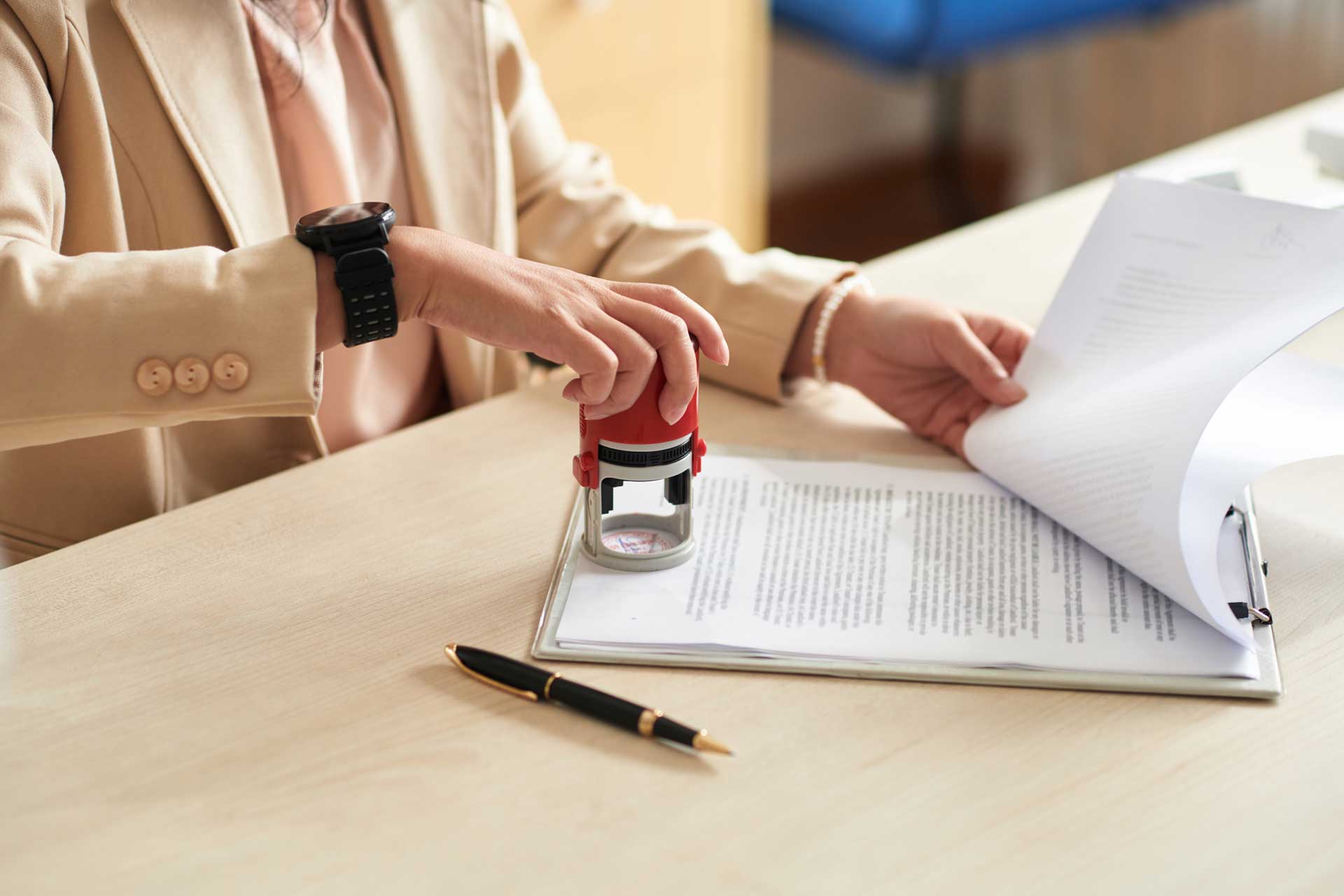
A Florida notary must include in every certificate the venue (State and County), type of act (acknowledgment or jurat), appearance method (physical or online), date, signer’s name, identification method, and the notary’s signature, printed name, commission number, and seal as required by Section 117.05, Florida Statutes.
For any document affecting real property, names and mailing addresses of signers and witnesses must appear beneath signatures, according to Section 695.26, Florida Statutes.
The signer must always appear personally before the notary, either physically or through an approved remote online notarization (RON) system under Florida’s online notarization statutes, Sections 117.201–117.305.
Handling Specific Document Types
Deeds
- Use an acknowledgment unless the document specifically requires an oath.
- Two subscribing witnesses are required under Section 689.01, Florida Statutes.
- Each witness’s name and mailing address must appear beneath their signature to avoid recording rejection under Section 695.26.
- If the property is a homestead, the spouse must join in the conveyance as required by Article X, Section 4 of the Florida Constitution.
- Complete a full acknowledgment certificate with all elements required by Section 117.05.
Mortgages
- Use acknowledgment wording unless closing instructions specify otherwise.
- Witnesses are not required by statute, but title companies may still ask for them.
- Ensure the acknowledgment includes every element listed in Section 117.05.
- Verify the preparer’s name and address appear if the mortgage will be recorded under Section 695.26.
Affidavits
- Use a jurat because the signer is swearing to the truth of the document.
- Administer the oath or affirmation before the signer signs.
- Complete the jurat certificate following Section 117.05(4).
- Do not offer explanations or legal interpretations of affidavit contents.
Full Closing Packages
- Identify which documents need acknowledgments, which need jurats, and which require witnesses.
- For deeds, confirm witness names and mailing addresses are printed beneath their signatures.
- For remote closings, ensure you are physically located in Florida and that the RON technology meets identity proofing and recording standards in Sections 117.265–117.295, Florida Statutes.
- Refer all legal questions to the closing attorney or title company.
Acknowledgment Certificate Wording
State of Florida, County of ______
The foregoing instrument was acknowledged before me by means of (physical presence or online notarization) this ___ day of ____, 20, by ______ (name of person acknowledging), who is personally known to me or has produced ______ (type of identification) as identification.
(Signature of Notary Public, State of Florida)
(Print or Stamp Name of Notary)
Personally Known ☐ Produced Identification ☐
This language meets the standards of Section 117.05(4).
Avoiding Unauthorized Practice of Law
Do not interpret legal terms, decide vesting, determine spousal requirements, or explain the effect of any document.
If a signer asks a legal question such as “Do I need my spouse to sign?” or “What does this clause mean?”, refer them to the attorney or title agent.
Your responsibility is identification, witnessing, oath administration, and completion of the certificate in compliance with Section 117.107, Florida Statutes.
Common Mistakes and How to Avoid Them
- Using acknowledgment instead of jurat for an affidavit.
Solution: Pre-mark documents by notarial act before the appointment.
- Deed missing witness mailing addresses, causing rejection after the 2024 change.
Solution: Verify witness names and addresses are printed under signatures (Section 695.26).
- Incorrect venue listed because notary traveled to another county.
Solution: Venue must reflect the county where the notarization occurs.
- Conducting a remote notarization while outside Florida.
Solution: The notary must be physically located in Florida during RON under Section 117.265.
- Providing explanations of legal content.
Solution: Refer questions to an attorney or title company to avoid violations of Section 117.107.
Best Practices for Professionalism and Accuracy
- Confirm all document requirements before the appointment.
- Verify identification and ensure the signer appears in person or through authorized online means.
- For deeds, ensure two witnesses sign and that witness address lines are complete.
- Double-check all certificate elements, including venue, date, and identification method.
- Keep your seal secure and never notarize incomplete documents.
- For RON, follow identity-proofing, credential-analysis, and recording standards in Section 117.245, Florida Statutes.
- Review all completed documents before submission.
- Maintain an accurate record of acts and continue education with the Governor’s Reference Manual for Notaries Public and Notary Public Association training programs.
Commitment to Professional Excellence
Maintaining precision, following statutory requirements, and acting strictly within the notary’s authorized role ensures every Florida real estate notarization is legally valid, professional, and secure for all parties involved.