Notary commissions don’t last forever, and understanding the renewal process before your expiration date arrives can save you from an unexpected gap in your authority to notarize. Whether you’re approaching the end of your first term or renewing for the fifth time, the steps to renew your notary commission follow a predictable pattern — but […]

Getting commissioned as a notary public opens doors to a respected role in your community — whether you want to serve clients part-time, add notarial services to an existing business, or build a full-time practice. The process to become a notary public varies by state, but the core steps are similar across the country, and […]

A notary public plays a quiet but essential role in countless legal and financial transactions every day — from home purchases to estate planning documents to international business contracts. If you’re just starting to research this career or credential, you’re in the right place to build a solid foundation of understanding. Become a Notary Public […]

Notaries public serve a critical role in everyday legal and financial transactions, acting as impartial witnesses to protect against fraud and ensure documents are properly executed. Whether you are signing a real estate deed, granting someone power of attorney, or swearing an affidavit, a notary’s duties are designed to give legal weight and credibility to […]

for members and future members of the Notary Public Association Maryland’s notary laws are designed to protect the public and maintain trust in notarized documents. Whether you are applying for the first time or renewing your commission, understanding the rules helps you perform your duties accurately. This FAQ compiles the most frequently asked questions about […]

Power of attorney documents carry significant legal weight, and Maryland notaries must adhere to strict statutory requirements when overseeing their execution. Before performing the notarization, it’s essential to understand what Maryland law requires, which forms need witnesses, and what role the notary is legally permitted to play. These responsibilities are significant, and mistakes can impact […]

Maryland requires all new and renewing notaries to complete state-approved education before receiving a commission. These rules ensure that every Maryland notary understands the law, adheres to ethical standards, and performs notarizations accurately. Training is now a legal requirement, not an optional step. Whether you’re applying for the first time or renewing your commission, the […]

Maryland notaries must use an official seal or stamp that clearly identifies their authority, jurisdiction, and commission details. While the state does not dictate a specific shape or ink color, it does require certain information to be displayed every time a notarial act is performed. These rules apply equally to physical stamps, embossers, and electronic […]

Serving as a Maryland Notary Public is an important public trust. Every notarization carries legal significance, and even small oversights can lead to serious consequences for signers, institutions, and the notary. Understanding common pitfalls and actively strengthening your skills through ongoing education can dramatically reduce errors and protect your professional reputation. The Notary Public Association […]

Maryland notaries play a central role in real estate transactions from validating signatures on deeds to facilitating mortgage signings. Because property transfers rely on strict statutory and recording requirements, notaries must understand Maryland-specific rules, witness standards, certificate formats, and how to coordinate effectively with title and settlement professionals. This guide provides practical, accurate instruction on […]

Administering oaths and affirmations is a central responsibility of every Maryland Notary Public. Whether conducted in person or through Remote Online Notarization (RON), notaries must follow clear legal and procedural standards to ensure every sworn statement is valid. This guide provides Maryland notaries with comprehensive, practical instructions for administering lawful, respectful, and professional oaths. Legal […]

Accurately identifying a signer is one of the most essential duties of a Maryland notary public. Proper identification protects the public, prevents fraud, and preserves the credibility of notarized documents. Maryland law outlines very clear standards for identification, including personal knowledge, satisfactory evidence, acceptable forms of ID, and the use of credible witnesses. This article […]

Maintaining a complete and compliant notary journal is one of the greatest safeguards a Maryland notary can rely on. Whether working in person, electronically, or through remote online notarization (RON), the journal serves as a legal record that protects both the notary and the public. Maryland law outlines detailed requirements for what must be documented […]

Notarial certificates are the written statements that document the specific official act a notary performed. In Maryland, these certificates carry significant legal authority because they establish who appeared, what actions were taken, and when they occurred. A properly completed certificate ensures documents are accepted by courts, recording offices, and institutions. This article explains Maryland’s major […]

Maryland strictly regulates the fees notaries may charge, and understanding these limits is essential for legal compliance and professional integrity. This article explains the maximum allowable fees, the acts to which they apply, travel-related charges, and the essential ethical expectations that guide how notaries communicate and collect fees. Maximum Fees for Standard Notarial Acts Maryland […]

Remote Online Notarization (RON) is now a permanent part of Maryland notarial law, enabling notaries to conduct secure electronic notarizations via audio-video communication. Although the process involves adding technology and identity verification steps, the state provides clear rules for becoming authorized, selecting compliant platforms, and managing long-term records. This guide explains the eligibility requirements, registration […]

Renewing your Maryland notary commission is an essential responsibility that ensures you can continue performing notarial acts without interruption. Because Maryland has very specific training, timing, and procedural requirements, understanding the renewal process in advance will save you time and prevent accidental lapses. This guide provides a clear, structured breakdown of everything you need to […]

This FAQ is for educational purposes only and does not constitute legal advice. For the official statutes, see Florida Statutes Chapter 117. For official guidance, visit the Florida Department of State Notary Section. 1. Who Can Become A Florida Notary Public? To qualify, you must: Requirements are outlined in §117.01, Florida Statutes.View §117.01 Requirements 2. […]
Florida’s Remote Online Notarization (RON) laws allow approved technology companies to support notaries in performing secure online notarizations. Becoming a registered RON service provider with the Florida Department of State (DOS) requires meeting clear standards for technology, security, compliance, and long-term record management. Legal Framework for RON Service Providers in Florida Florida law defines a […]
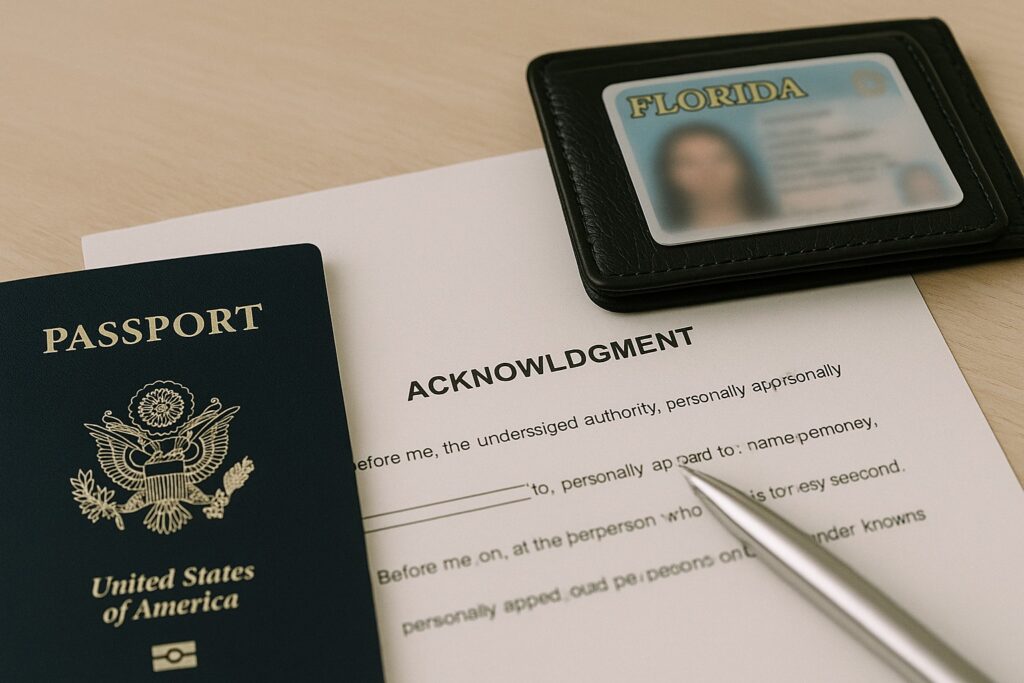
Florida notaries serve as impartial guardians of trust, and that trust begins with correctly identifying the signer. Florida Statutes require a notary to either personally know the signer or have “satisfactory evidence” of identity before notarizing. This includes documenting in the notarial certificate whether you relied on personal knowledge or a specific form of identification. […]
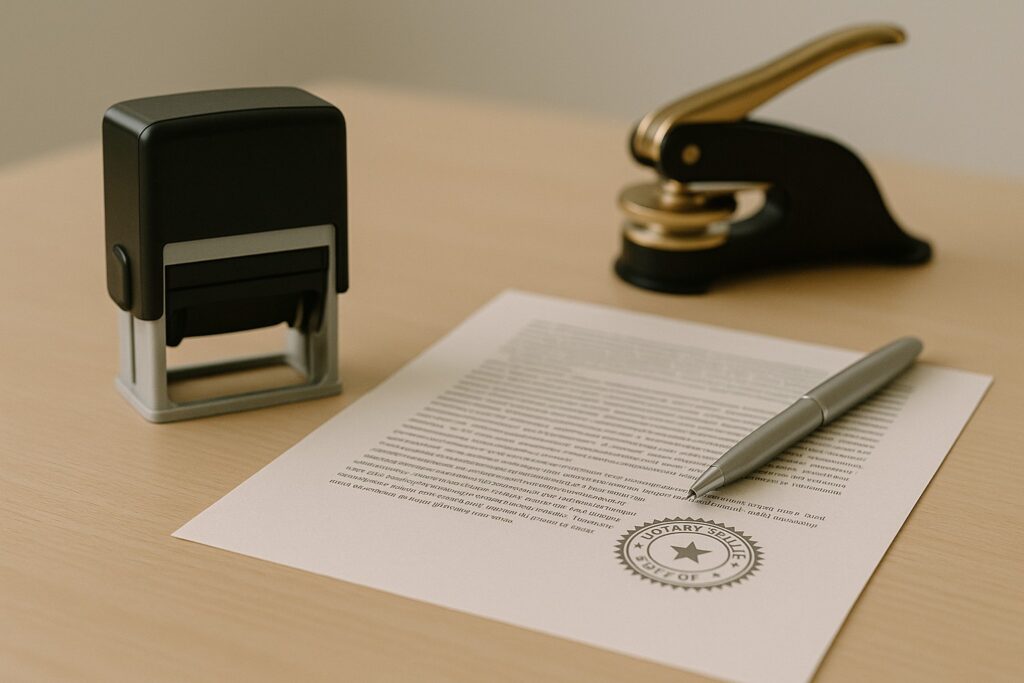
Florida’s notary seal requirements are designed to protect the public by ensuring every notarization is clearly identifiable, traceable, and legally valid. Chapter 117 of the Florida Statutes outlines exactly what must be included on a notary’s physical and electronic seals, the correct way to apply them, and the steps to follow if the seal is […]

Florida notaries are entrusted with protecting the integrity of important legal and personal transactions. Small oversights can lead to document rejection, legal disputes, or disciplinary action, so understanding the most common mistakes and how to prevent them is essential for every practicing notary. Improper Or Insufficient Identification Florida law requires satisfactory evidence of identity, which […]

Power of Attorney (POA) documents are powerful legal instruments authorizing an agent to act on behalf of a principal. In Florida, notaries play a critical role in ensuring that POA documents are correctly executed. Correct notarization protects the principal, prevents fraud, maintains document validity, and keeps the notary safely within the limits of Florida law. […]