West Virginia Notary Public Course

Full Course + Exam Resources:

$25.00

A white mug with the Notary Public Association (NPA) logo in gold sits on a wooden desk next to a smartphone. In the background, a laptop screen displays a webpage for a Notary Certification Course, featuring an image of certificates and a description of the course. The scene is minimalistic and professional.

Everything You Need In One Place

Our West Virginia Notary Training Course teaches the essential knowledge and skills to perform notarial acts accurately and confidently. You’ll learn West Virginia laws, procedures, and professional standards. This is a supplemental course and does not fulfill any official state education or renewal requirements.

Steps to Becoming a West Virginia Notary Public

NPA logo watermark with color
Step #1
To qualify as a West Virginia notary public, you must be at least 18 years old, a U.S. citizen or permanent legal resident, and either live in West Virginia or be employed in the state. You must also be able to read and write English, have a high school diploma or equivalent.
Meet West Virginia Notary Eligibility Requirements
NPA logo watermark with color
Step #2
Applications are submitted to the West Virginia Secretary of State and must include your name (as it will appear on notarizations), West Virginia mailing address for your stamp, email, phone number, and required attestations. You must also indicate whether you intend to perform electronic notarial acts.
Complete the West Virginia Notary Public Application
NPA logo watermark with color
Step #3
A $52 filing fee must accompany your application to the Secretary of State. Optional expedited processing is available for an additional charge. No surety bond is required to become a notary in West Virginia.
Submit Your Application Fee
NPA logo watermark with color
Step #4
Once your application is approved, you will receive your official commission letter, which includes the exact information required on your notary seal—your name, address, commission expiration date, and more. Review the letter carefully to ensure accuracy. You may begin performing notarial acts as soon as your commission is active.
Receive Your Notary Commission
NPA logo watermark with color
Step #5
Using the information in your commission letter, you must order your notary stamp from a vendor of your choice. The stamp must include: “Official Seal,” “Notary Public,” “State of West Virginia,” your name, address, commission expiration date, and a border no larger than 1” × 2.5”. Any stamp information changes must be reported to the Secretary of State.
Purchase Your Notary Seal
NPA logo watermark with color
Step #6
While West Virginia does not require notaries to keep a journal, maintaining one is strongly recommended. A detailed record book protects you in the event a notarized document is questioned later and helps demonstrate proper performance of your duties. Suggested journal entries include date, type of act, document type, signer details, signatures, fees, and notes.
Maintain a Notary Journal (Recommended)
Step #1
Step #2
Step #3
Step #4
Step #5
Step #6

Meet West Virginia Notary Eligibility Requirements

To qualify as a West Virginia notary public, you must be at least 18 years old, a U.S. citizen or permanent legal resident, and either live in West Virginia or be employed in the state. You must also be able to read and write English, have a high school diploma or equivalent.

Complete the West Virginia Notary Public Application

Applications are submitted to the West Virginia Secretary of State and must include your name (as it will appear on notarizations), West Virginia mailing address for your stamp, email, phone number, and required attestations. You must also indicate whether you intend to perform electronic notarial acts.

Submit Your Application Fee

A $52 filing fee must accompany your application to the Secretary of State. Optional expedited processing is available for an additional charge. No surety bond is required to become a notary in West Virginia.

Receive Your Notary Commission

Once your application is approved, you will receive your official commission letter, which includes the exact information required on your notary seal—your name, address, commission expiration date, and more. Review the letter carefully to ensure accuracy. You may begin performing notarial acts as soon as your commission is active.

Purchase Your Notary Seal

Using the information in your commission letter, you must order your notary stamp from a vendor of your choice. The stamp must include: “Official Seal,” “Notary Public,” “State of West Virginia,” your name, address, commission expiration date, and a border no larger than 1” × 2.5”. Any stamp information changes must be reported to the Secretary of State.

Maintain a Notary Journal (Recommended)

While West Virginia does not require notaries to keep a journal, maintaining one is strongly recommended. A detailed record book protects you in the event a notarized document is questioned later and helps demonstrate proper performance of your duties. Suggested journal entries include date, type of act, document type, signer details, signatures, fees, and notes.

Fully Online & State Aligned​

Our West Virginia Notary Training Course is delivered entirely online, allowing you to study on your own schedule—anytime, from any device.

You’ll gain essential knowledge and practical guidance to perform notarial acts confidently and in full compliance with West Virginia law. Please note: this course is supplemental and does not satisfy any official state education or renewal requirements.

Notary Course for New york on laptop
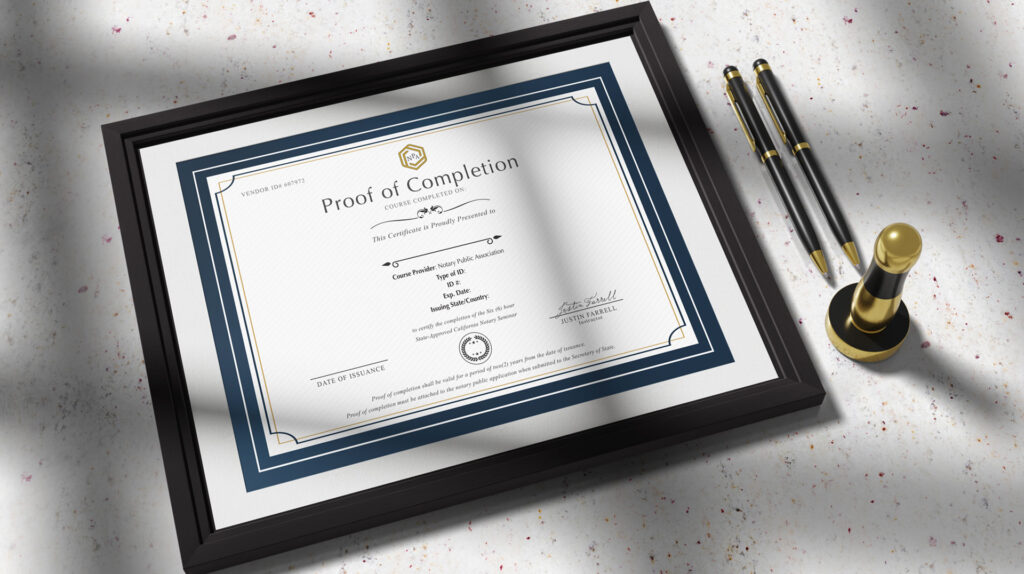
Proof of Completion Certificate in frame

West Virginia Certificate of Completion

Upon completing the West Virginia Notary Training Course, you will receive a Certificate of Completion.

This certificate reflects your understanding of West Virginia notary laws, procedures, and recommended best practices. Although it is not required or officially recognized by the State of West Virginia, it can strengthen your professional credibility and help you stand out to clients, employers, and organizations seeking knowledgeable notarial services.

Student Reviews

A woman who is a notary in West Virginia
"This course made it simple to understand West Virginia’s notary laws without overwhelming you. Everything was clear, practical, and focused only on what WV notaries actually need to know. I really liked how easy it was to pause and come back whenever I needed."
Sarah M.
Student who took West Virginia Notary Course
"I’ve been meaning to become a notary for years, and this course finally made it feel doable. The sections on WV procedures and required stamp details were especially helpful. Straightforward, no fluff, and very professional."
Jason R.
WV-Student-3
"Great course! It explained West Virginia’s rules in a way that actually made sense. I appreciated how organized the material was and how it stayed focused on state-specific information. Perfect for anyone new to the process."
Emily T.
A student who took the NPA West Virginia Notary Course
"Clear, efficient, and easy to follow. I liked that the course stuck to West Virginia laws and didn’t waste time with information that didn’t apply. It gave me the confidence to start my application right away."
Brandon K.
WV-Student-4
"Solid training for anyone wanting to understand the WV notary process. The examples and explanations were practical and the pacing was perfect for studying on my own time. Absolutely worth it."
Michael D.

FAQs

Most Frequent Questions and Answers

A: No. You may become a West Virginia notary public if you live in West Virginiaor if you are employed in West Virginia. You must also meet the state’s qualifications, including being at least 18, a U.S. citizen or permanent resident, able to read and write English, and having a high school diploma or equivalent.

A: This course is fully online and self-paced. Most students finish it within 2 to 4 hours, but you’re free to take as much time as you need. Your progress automatically saves as you move through the lessons..

A: Yes. You will receive a downloadable Certificate of Completion once you finish the course. This certificate is not required or recognized by the West Virginia Secretary of State, but it can help demonstrate your professionalism and understanding of state notary laws.

A: Yes. A short assessment is included to reinforce your understanding of West Virginia notary laws, duties, and best practices. This exam is not a state requirement, but it helps validate your knowledge.

A: Absolutely. Whether you are renewing or newly applying, this course provides a helpful refresher on current West Virginia notary laws, electronic notarization rules, and recommended best practices.

A: No. You only need a device such as a computer, tablet, or smartphone with an internet connection and a web browser. No extra software, downloads, or special tools are required.


A: This course is self-guided, but our team is available if you have questions about the material. We can help clarify course content, but we cannot provide legal advice. For questions about specific notarial situations, you should contact the West Virginia Secretary of State’s Office or consult an attorney.

Join our Newsletter!

Stay informed with our latest updates, tips, and exclusive offers – subscribe now!