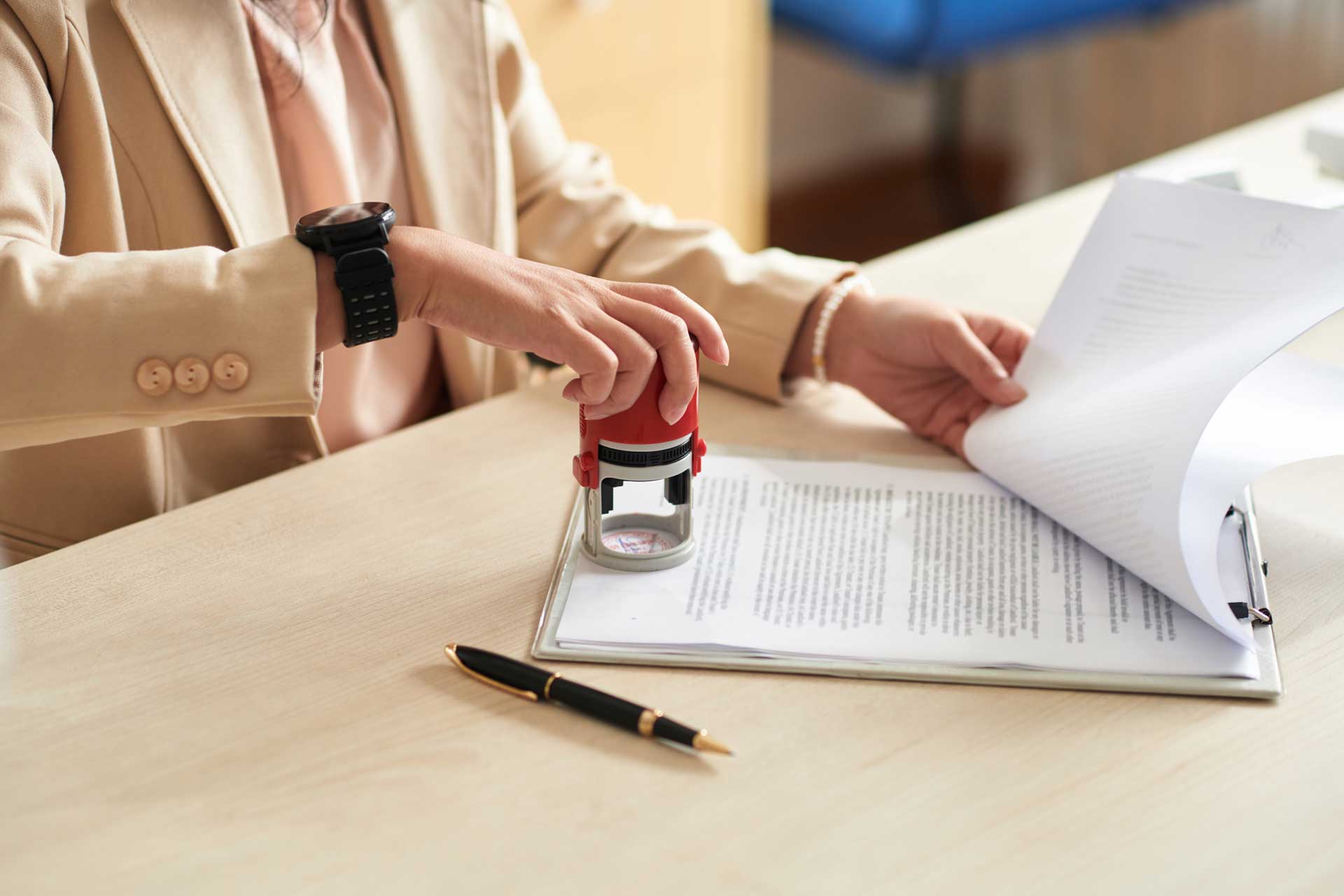
Power of Attorney (POA) documents are powerful legal instruments authorizing an agent to act on behalf of a principal. In Florida, notaries play a critical role in ensuring that POA documents are correctly executed.
Correct notarization protects the principal, prevents fraud, maintains document validity, and keeps the notary safely within the limits of Florida law.
Understanding The Notary’s Role
A notary’s responsibilities during a POA signing are limited and clearly defined under Florida law. Notaries do not review the legality of the POA, do not interpret the scope of authority, and do not guide which type of POA is appropriate. Your duties are to identify the signer, ensure voluntary and competent participation, verify proper witnesses, and complete the required notarial certificate.
Identifying The Required Notarial Act
Most Power of Attorney documents in Florida require an acknowledgment of the document. The principal acknowledges that they have signed the document willingly for its intended purpose. A jurat is used far less often and should only be completed when the document clearly contains jurat wording. A notary must never select the certificate for the signer, as doing so constitutes providing legal advice.
(Acknowledgment and jurat guidance:
Confirming Signer Identity
Florida requires notaries to verify identity using acceptable government-issued identification, such as:
- Florida driver license
- State identification card
- U.S. passport
- Military identification
- Permanent resident card
Credible witnesses may be used if statutory conditions are met. Identity verification is especially important for POA documents because these forms can grant access to finances, property, and decision-making authority.
Checking Competence And Willingness
A principal must appear aware, capable, and willing. The notary should ensure the signer understands they are signing a Power of Attorney and is not being pressured or manipulated. If the signer seems disoriented, confused, or unable to communicate comprehension, the notarization must be declined. A notary does not determine medical capacity, but they must confirm observable competence at the time of signing.
Witness Requirements In Florida
Florida law requires POA documents to be signed by the principal in the presence of two witnesses and then notarized. Important points include:
- One of the witnesses may be the notary.
- The second witness must be another adult who is physically present.
- All signatures must occur together as part of the same execution process.
- Witnesses must sign in the principal’s presence.
Witnessing requirements exist to strengthen the legitimacy of a POA and prevent fraud or undue influence.
Red Flags During POA Notarization
Notaries must stay alert to issues that require stopping the notarization, such as:
- Missing principal signature or unsigned signature areas
- Someone attempting to sign on behalf of the principal without meeting Florida rules for substitute signers
- Incomplete sections or blank fields that could later be altered
- Pressure from family members, agents, or caregivers
- The signer asking the notary to explain legal consequences
- The signer appearing confused about what rights they are granting
Any of these concerns may invalidate the notarization or expose the notary to liability.
Quick Notary Checklist For Florida POAs
Before completing a notarization, the notary should confirm:
- The document is complete, with no blanks
- The principal is present, willing, and competent
- Acceptable identification has been verified
- Two witnesses are physically present
- The correct notarial certificate is already included in the document
- No one is pressuring or influencing the signer
- All parties sign in the proper order
- The notary certificate is completed accurately and sealed
This simple checklist prevents the majority of common POA errors.
Strengthening Professional Notarial Practice
Proper handling of Power of Attorney documents requires knowledge, caution, and strong ethical judgment. Continuing education through the Notary Public Association helps ensure notaries remain confident, compliant, and well-prepared for these high-stakes notarizations.